
Things to Do in Dushanbe in September
September weather, activities, events & insider tips
Shoulder Season · Good Value
September Weather in Dushanbe
Long-run averages for September
88°F (31°C)
High Temp
54°F (12°C)
Low Temp
0.2 inches (5 mm)
Rainfall
30%
Humidity
7
Sunny-Day UV
⚠ That 19°C (34°F) swing between afternoon highs and overnight lows ranks among the most extreme you'll find in any capital city. Hypothermia kills unprepared trekkers. Camp above 3,000 m (9,843 ft) and you'll face overnight lows well below freezing. Even September.
⚠ Dust and 30% humidity hit harder than most travelers anticipate. Expect nosebleeds. Expect cracked skin. Expect dehydration before you notice thirst. The sun feels milder than humid tropical heat. It lies. UV exposure intensifies at altitude. It accumulates. Drink before thirst hits.
⚠ Earthquakes happen here. Dushanbe sits in an active seismic zone. Minor tremors shake the city regularly. Know your building. Know your exits. Basic precautions matter.
Making the most of September in Dushanbe? Browse tours and activities in Dushanbe on GetYourGuide.
Is September Right for You?
Weigh the advantages and considerations before booking
Advantages
- + September is arguably the single best month to be in Dushanbe. The summer furnace that pushes July to 36°C (97°F) has finally broken. Daytime highs around 31°C (88°F) feel manageable, given the dry 30% humidity. Evenings cool to 12°C (54°F). You can walk Rudaki Avenue after dark without the pavement radiating heat back at you.
- + Independence Day on September 9 fills the capital with parades, live concerts along Dusti Square, and public celebration. Tajik families spread dastarkhan cloths in Rudaki Park. They share plov with anyone nearby. The atmosphere is generous and unselfconscious. Most national holidays in tourist-heavy capitals cannot match this.
- + The Pamir Highway and Fan Mountains are at peak accessibility. Summer snowmelt has stabilized the roads. October's early snowfalls have not yet started. The high passes above 4,000 m (13,123 ft) are reliably open. If you are planning the Dushanbe-to-Osh overland route, September is likely your last comfortable window.
- + With negligible rainfall of just 5 mm (0.2 inches) for the entire month and almost zero chance of a washout day, you can plan outdoor excursions to Iskanderkul Lake or Hissar Fortress without a backup itinerary. The light is extraordinary this time of year. It turns golden and low-angled by late afternoon. The Varzob Valley becomes something a landscape painter would struggle to capture honestly.
Considerations
- − The daily temperature swing is dramatic. It catches first-timers off guard. You might start the morning in a fleece at 12°C (54°F), strip to a t-shirt by noon, and need that fleece again by 8 PM. Packing for one temperature does not work here.
- − Dushanbe sits at roughly 800 m (2,625 ft). If you are heading into the Fan Mountains or toward the Pamir, you will climb fast. Altitude sickness is a real concern above 3,000 m (9,843 ft). September's clear skies can trick you into pushing harder than you should. The weather feels so cooperative.
- − Tourism infrastructure remains limited compared to Central Asian neighbors like Uzbekistan. English signage is sparse outside the capital center. Menus at neighborhood choyxonas are in Tajik or Russian only. Getting around without at least basic Russian phrases or a translation app requires patience. Licensed guides tend to book out weeks ahead for September departures.
Settled on September? Compare hotel prices in Dushanbe for your dates on Trip.com.
Best Activities in September
Top things to do during your visit
September arrives in Dushanbe like an exhale after the long Central Asian summer. The daily highs, which pressed past 35 degrees Celsius through July and August, pull back to around 31 degrees, and the nights cool dramatically to roughly 12 degrees. That is enough to sleep with a window cracked open to the sound of plane trees rustling along Rudaki Avenue. Rain is almost nonexistent: barely five millimetres for the entire month, continuing the arid stretch that began in June. The air is dry and thin, carrying the faint mineral smell of sun-baked concrete and the sweetness of late-season grapes piled on wooden carts along the roadside. This is Dushanbe at its most navigable, warm enough for shirtsleeves by midday but no longer punishing, and weeks away from the autumn rains that begin accumulating in October. The capital feels unhurried in September. Students return to the universities along Sino Street, and the wide Soviet-era boulevards take on a workaday rhythm after the torpor of high summer. Families gather in the late afternoon shade of Rudaki Park, where old men play chess on stone benches and the clatter of backgammon tiles mixes with the hiss of samovars at open-air chaikhanas. The bazaars, Mehrgon in particular, overflow with pomegranates splitting their skins, yellow Fargona melons, and ropes of dried apricots whose honeyed, slightly tangy scent hits you from twenty paces. Dushanbe is not a city that performs for tourists. Its pleasures are quotidian, and September's comfortable temperatures let you walk into them without the calendar pressure of a festival schedule or the physical limits of midsummer heat. For travelers weighing when to arrive, September sits in a narrow window. The Pamir Highway is still passable before early snowfall threatens the higher passes, and the alpine lakes that ring the capital hold the deep turquoise of low water levels and strong sunlight. Dushanbe itself is safe and approachable. Petty crime is low, locals are direct and hospitable, and the police checkpoints that once dotted the city centre have largely disappeared. Restaurants serve plov rich with cumin-scented lamb fat and shredded carrots, and the local qurutob, torn flatbread soaked in a salty, creamy yogurt sauce, is best eaten at the rough wooden tables of neighbourhood spots where the bread is still warm and the yogurt still sharp. This is a month that rewards the unhurried traveler, one willing to sit with a second glass of green tea and watch the light shift from gold to copper on the Hissar Range.

Dushanbe to Osh on Pamir Highway
otherThe overland route from Dushanbe to Osh along the Pamir Highway is one of the last great road journeys on Earth, a multi-day traverse across some of the highest inhabited plateaus in Central Asia. The road climbs from the Tajik capital's lowland warmth into the Eastern Pamirs, where the air thins and the landscape empties into vast brown-gold valleys dotted with yurt camps and framed by peaks above 7,000 metres. You pass through Khorog, Murghab, and a succession of caravanserai settlements where the smell of burning yak dung drifts from felt-walled homes and the silence is so complete you hear your own pulse at altitude.
This is the full Pamir Highway crossing, the highest-altitude international road corridor in the former Soviet Union, a journey that compresses deserts, glacial rivers, and nomadic high-plateau life into a single continuous drive.
Insider tip: Request a stop at Bulunkul, the coldest inhabited settlement in Central Asia, where the salt lake reflects the surrounding peaks in an almost hallucinatory stillness at dawn. Most itineraries pass through too quickly to appreciate it.
This month: September is one of the last reliable months for a full Pamir Highway crossing before early snow can close the Ak-Baital Pass (4,655 metres) and the Kyzyl-Art border crossing into Kyrgyzstan, which becomes unpredictable from mid-October onward.

Private Full-Day Tour to Iskandarkul
day_tripIskandarkul sits roughly 130 kilometres north of Dushanbe in a glacial cirque of the Fann Mountains, a lake so intensely turquoise it looks retouched in photographs but registers that colour in person because of suspended rock flour from the surrounding limestone. The drive from the capital climbs through the Anzob Pass, still a rough stretch of switchbacks and unlit tunnels where headlights catch the wet gleam of bare rock, before dropping into a valley where the air smells of juniper scrub and cold water. At the lakeshore, the temperature sits noticeably cooler than Dushanbe, and the silence is broken only by the rush of the outflow stream and the occasional call of a golden eagle circling the thermals.
Named for Alexander the Great, whose army reportedly camped along these shores, Iskandarkul is the single most dramatic day trip from Dushanbe, a high-altitude alpine lake accessible without a multi-day expedition.
Insider tip: Arrive before midday, when the sun is directly overhead and the lake's colour is at its most saturated. By late afternoon, the surrounding peaks cast long shadows that darken the water to a flat grey-green.
This month: September's dry conditions and clear skies make Iskandarkul's colour most vivid. The Anzob Pass road, prone to mudslides during the spring melt months of March and April, is at its most stable.

Dushanbe City Tour & Hissar Fortress
guided_experienceThis combined itinerary pairs a guided walk through Dushanbe's centre with a drive south to the Hissar Fortress, covering two distinct registers of Tajik history in a single day. In the capital, you pass the enormous flagpole on Somoni Square, once the world's tallest, and the gold-domed National Museum, whose ground-floor halls hold a reclining Buddha excavated from the ruins at Ajina Tepa, its cracked terracotta surface still carrying the chalky scent of ancient plaster. At Hissar, twenty-five kilometres west of the city, you stand before a massive mudbrick gateway flanked by two cylindrical towers, remnants of a fortress that controlled the trade route between Samarkand and the Pamir for centuries. The surrounding madrasa, partly restored, smells of damp clay and whitewash, and the courtyard's crumbling walls frame views of the flat agricultural plain stretching toward the mountains.
It compresses Dushanbe's Soviet and post-independence layers alongside a pre-modern fortress into a single narrative arc, the full sweep of Tajik identity in one guided day.
Insider tip: Ask your guide to take you to the old hammam ruins behind the Hissar madrasa, which most groups skip. The vaulted brick ceiling is partially intact and the acoustics inside produce an eerie, resonant echo.

Dushanbe City Private Tour
private_tourA private city tour of Dushanbe strips away the transit logistics and lets you move at your own pace through a capital that rewards curiosity over checklists. Your guide navigates the grid of wide Soviet avenues and narrower residential lanes where mulberry trees drop overripe fruit onto cracked pavement, staining the concrete a deep purple-red. Stops typically include the Tajikistan National Museum, where the Ajina Tepa Buddha and Sogdian-era murals occupy cool, dimly lit galleries. The large Mehrgon Bazaar, where vendors slice open melons for tasting and the air is thick with the smell of ground cumin, dried mint, and fresh naan still blistering from the tandoor. And the ornate Navruz Palace, whose interior tilework and painted ceilings recall the decorative vocabulary of Samarkand and Bukhara but at a scale that belongs to Dushanbe alone.
Dushanbe does not reveal itself through monuments. It reveals itself through texture and pace, and a private guide lets you follow the threads that interest you rather than ticking boxes.
Insider tip: Ask to visit the Green Bazaar (Sadbarg) in addition to Mehrgon. It is smaller, less touristed, and the dried-fruit vendors there often let you taste their kuraga (dried apricots) and tut (dried mulberries) before buying.

Hisar Fortress, One-day tour
guided_experienceThis full-day guided excursion to Hissar Fortress takes a more deliberate pace than the combined city-and-fortress tours, spending the bulk of its time at the archaeological complex itself. The fortress sits on a low rise above the Kafirnigan River plain, and approaching it from the east you see the twin cylindrical towers of the main gate rising above wheat-stubble fields where farmers burn the chaff in thin blue-grey plumes that hang in the still air. Inside the complex, the 16th-century Madrasa-i-Kuhna retains enough of its original brickwork to show the geometric patterning that Central Asian builders used to signal a structure's importance, and the adjacent caravanserai foundations trace out the footprint of rooms where Silk Road traders once slept on felt mats over packed earth. The site is not manicured or roped off. You walk directly on centuries-old ground, feeling the crunch of dry clay and loose stone underfoot.
Hissar is Tajikistan's most intact pre-modern fortress complex, and a dedicated visit gives you time to absorb its layered history, Timurid, Bukharan, Soviet excavation, rather than treating it as a photo stop.
Insider tip: Walk past the main gate to the far side of the hill where a small mausoleum sits alone among apricot trees. It is usually empty, and the view back toward the fortress with the Hissar Range behind it is the best composition at the site.
This month: September's dry conditions mean the unpaved paths within the fortress complex are firm and walkable. During the spring months, the same paths turn to slick clay after heavy rain.

Pamir Highway in 5 days from Dushanbe to Osh
otherThe five-day Pamir Highway journey from Dushanbe to Osh is the compressed version of the full crossing, and it trades some of the longer route's contemplative pacing for an efficient, day-by-day progression through the most dramatic sections of the road. You leave Dushanbe's plane-tree avenues behind and within hours are climbing through the Vakhsh gorge, where the river below runs a thick, silty brown between walls of striated rock that glow amber in the afternoon light. By day two you reach Khorog, the Pamiri capital, where the botanical garden, one of the highest in the world, clings to a steep hillside above the Gunt River, and the scent of wild roses and medicinal herbs fills the terraced paths. The final days cross the Eastern Pamir plateau, a landscape of such emptiness that the distant sight of a yurt trailing woodsmoke feels like an event, before the descent into Kyrgyzstan's Fergana Valley and the endpoint of Osh.
Five days is the minimum to absorb the Pamir Highway's full emotional range, from subtropical gorge to high desert to nomadic plateau, without the time commitment of a week-long expedition.
Insider tip: Carry cash in Tajik somoni for the homestays in Alichur and Murghab, where card terminals do not exist and the nearest ATM is a full day's drive behind you.
This month: September offers reliably clear skies over the Eastern Pamir plateau, with pass temperatures cold but not yet dangerous. The Ak-Baital Pass at 4,655 metres is typically snow-free through the month, unlike October when early storms can close it without warning.
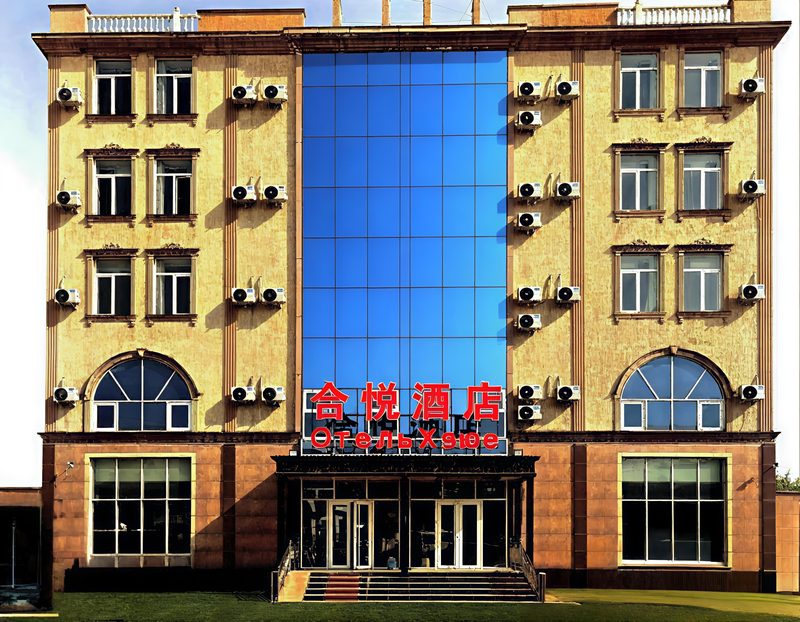
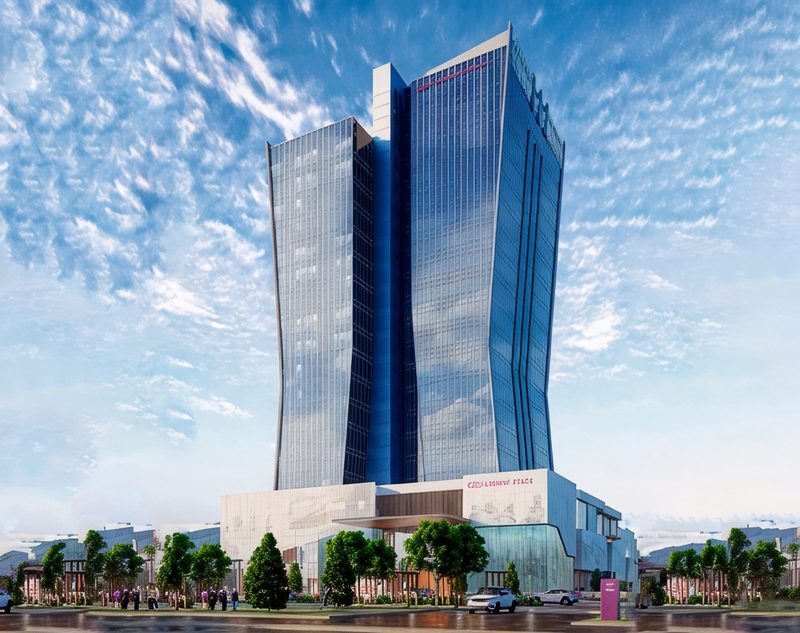
Where to Stay in Dushanbe in September
Hand-picked hotels across price tiers for September travellers.
Public Holidays in September
Dates that affect opening hours, transport and crowds
Independence Day
Observed nationwide as a public holiday. Date calculated from the national holiday calendar.
Independence Day
Observed nationwide as a public holiday. Date calculated from the national holiday calendar.
Packing Checklist
Bookmark this page — your progress is saved between visits
Need the full list with shopping links?
Climate-specific gear, brand recommendations, and what to leave at home.
View Dushanbe Packing List →Essential Tips
Insider knowledge and common pitfalls to avoid
Insider Knowledge
The Mehrgon Bazaar is not one market but several interconnected halls, and the section most tourists see, the produce floor closest to the main entrance, is the least interesting. Push through to the back halls where dried fruit vendors sell kuraga (dried apricots) and tut (dried mulberries) by weight, and where the quality is noticeably higher than the front stalls because these vendors sell primarily to locals buying in bulk for winter. September is when the new harvest arrives, and the difference between fresh-dried and year-old stock is obvious in both color and taste. Worth the effort.
Shared taxis are Dushanbe's real transit system, not the city buses. They run fixed routes along the main avenues, and you flag them down like you would a taxi. But they pick up multiple passengers heading the same direction. The fare is nominal. Hold up one finger for one seat. The system is invisible to tourists who do not know to look for it. But once you see it, the city opens up.
September 9 Independence Day makes accommodation scarce in the city center for roughly four days surrounding the holiday. Domestic travelers from the provinces flood in. If your dates overlap, book your room at least a month ahead. Conversely, the week after the holiday often has the best availability and rates of the entire autumn.
The evening promenade along Rudaki Avenue between the Opera House and Rudaki Park is Dushanbe's living room from roughly 6 PM to 10 PM in September. Families, couples, teenagers, and old men playing chess on benches fill the boulevard, and this is the best window to experience how the city lives when it is not performing for anyone. The choyxonas flanking the avenue serve tea and sambusa until late, and nobody minds if you sit for two hours over a single pot of green tea.
Avoid These Mistakes
Do not underestimate the temperature drop after sunset. At 31°C (88°F) during the day, September in Dushanbe feels like summer. By 9 PM it is 15°C (59°F) and falling. Travelers in shorts and sandals at dinner are cold and visibly unprepared. Locals notice. Pack layers.
Never attempt the Pamir Highway as a rushed three-day sprint from Dushanbe. The altitude gains are serious, the road conditions demand slow driving, and the landscapes deserve more than a window blur. Four to six days is the honest minimum, and skipping acclimatization days above 3,500 m (11,483 ft) risks altitude sickness that ends the trip at a clinic in Khorog. Slow down.
Do not assume credit cards work outside the capital center. Dushanbe has ATMs along the main avenues and a handful of restaurants accept cards. But once you leave the city, cash in Tajik somoni is the only currency that matters. Change enough before departing. The bazaars, shared taxis, choyxonas, and mountain guesthouses are cash economies with no exceptions.
Short on time? See day trips around Dushanbe on GetYourGuide.
Ready to plan your trip to Dushanbe?
Now that you've got the research covered, here's where to go next.
Explore More Activities in Dushanbe
Didn't see anything interesting yet?
Browse Viator's full catalog of tours, day trips, food experiences, and private guides in Dushanbe.
See All Dushanbe Tours on Viator